For The First Time In Modern History, The Power To Create Money Is In The Hands Of The People
Since the dawn of civilization, money creation has been the exclusive privilege of rulers. Kings minted coins bearing their image. Central banks printed currency at will. Governments controlled supply, manipulated value, and extracted wealth through seigniorage. The people had no choice but to accept whatever money was imposed upon them. This concentration of monetary power enabled wars, funded oppression, and concentrated wealth in the hands of the few. But in 2009, everything changed. Bitcoin’s invention proved that money could be created, secured, and maintained by the people themselves—without kings, without central banks, without permission. For the first time in modern history, the power to create money is in the hands of the people.
Historical Money Has Always Been Ruler-Controlled
Rulers used coinage to project power and extract wealth. The first minted coins appeared in Lydia around 600 BC, stamped with the images of lions and rulers. These weren’t neutral tools of commerce—they were propaganda, advertising the state’s dominance while collecting seigniorage (the difference between metal value and face value). Every transaction using royal coins reinforced the ruler’s authority and funded their ambitions. Money served the state before it served the people.
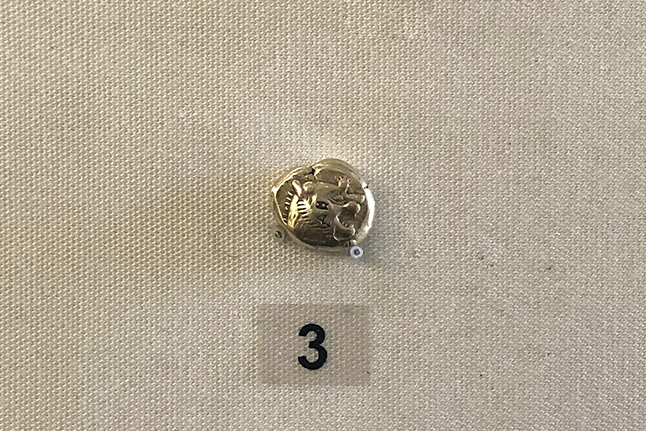
Coin imagery served as propaganda for the ruling class. Walk through any museum’s coin collection and you’ll see the pattern: faces of emperors, symbols of state power, religious iconography legitimizing authority. Eagles, lions, and gods proclaimed dominance. Even today, “In God We Trust” appears on US currency—not because the state is religious, but because associating money with divine authority discourages questioning it. The medium carried the message: accept this money, accept this ruler.
Rulers discovered they could debase money for profit. Once people accepted coinage by royal decree, rulers realized they could mix base metals with gold and silver, stretching the same precious metal supply further while extracting more wealth. This inflation—hidden taxation—transferred purchasing power from citizens to the crown. Roman emperors debased the denarius until it was worthless paper. Medieval kings clipped coins. Modern governments print fiat. The playbook is ancient: promise stable money, then steal value through supply expansion. When has government money ever maintained its value over centuries?
Banks centralized money creation through debt. The invention of double-entry bookkeeping enabled fractional reserve banking—where banks create money through lending rather than governments through minting. This shifted money creation from state treasuries to private institutions, but the control remained centralized. Bankers decided who received loans, who got credit, who participated in the economy. The power to create money stayed concentrated, just in different hands. What changed when bankers replaced kings as money creators?
Bitcoin Decentralizes Money Creation
Bitcoin fundamentally inverts the historical pattern. Instead of rulers creating money and imposing it on people, the people create money through consensus and proof-of-work. No central authority issues Bitcoin. No institution controls its supply. The protocol rules are transparent, immutable, and enforced by mathematics rather than by men with armies or bank charters.
Anyone can participate in money creation. Bitcoin mining is permissionless. You don’t need a royal charter, banking license, or government approval. Anyone with electricity and computing power can contribute to network security and earn Bitcoin rewards. The playing field is level—a teenager in Nigeria competes under the same rules as a billion-dollar mining operation. When did money creation last welcome participation from everyone?
Fixed supply eliminates manipulation. Bitcoin’s 21 million coin cap is enforced by consensus rules that no one can change unilaterally. Unlike fiat that can be printed infinitely, or gold that can be mined from asteroids, Bitcoin’s scarcity is mathematical and absolute. The people who hold Bitcoin don’t need to trust that supply won’t be inflated—they verify it themselves by running nodes. When did you last hold money whose supply you could personally audit?
Consensus governs monetary policy, not decree. Changes to Bitcoin require broad agreement among node operators, miners, and developers. No CEO can alter the monetary policy. No government can mandate inflation. No central bank can conduct quantitative easing. The rules are embedded in code that only changes when overwhelming consensus emerges. This distributed governance makes Bitcoin resistant to capture by any single interest. How different is money governed by consensus versus money governed by decree?
Open source enables permissionless innovation. Bitcoin’s code is public, auditable, and improvable by anyone. Developers worldwide contribute to wallets, payment systems, and infrastructure without seeking permission. If you disagree with Bitcoin’s direction, you can fork the code and try your own approach. This openness ensures the money evolves based on user needs rather than institutional preferences. What becomes possible when monetary innovation is permissionless?
For The First Time In Modern History, The Power To Create Money Is In The Hands Of The People. Use Bitcoin.
The history of money is the history of concentrated power. From Lydian kings to Federal Reserve chairs, money creation has always served the few who controlled the supply. Bitcoin breaks this chain. It demonstrates that money can be secure, scarce, and functional without centralized authority. That anyone can participate in creation and verification. That monetary policy can emerge from consensus rather than command. For the first time in modern history, the power to create money is in the hands of the people. This isn’t just technological innovation—it’s a fundamental shift in the balance of economic power. From rulers to citizens. From institutions to individuals. From trust to verification. The implications will unfold for generations. But the opportunity is available now. Take the power. Use Bitcoin.