Money And Power Are Inseparable
Throughout history, whoever controlled the money controlled the world. Kings debased currency to fund wars. Central banks print money to serve political agendas. Financial elites manipulate systems to extract wealth from the masses. Money is power, and power has always been concentrated in the hands of the few. But this dynamic is changing. For the first time in history, individuals can participate in a monetary system that no government controls, no central bank manipulates, and no elite can dominate. Bitcoin separates money from state power, returning financial sovereignty to individuals. Money and power are inseparable—but now, that power is being distributed rather than centralized.
The Stone Age Of Money
The earliest forms of money were physical objects with intrinsic value—commodities that required work to acquire and could be verified by anyone. Ancient civilizations used shells, beads, precious minerals, and even massive stones as mediums of exchange. These early monetary systems had limitations: stones were immobile, shells could be found abundantly in some regions, and metals required mining and refining. But they shared a crucial characteristic—no central authority controlled their production. Money emerged organically from trade, not from government decree.
Some cultures developed fascinating solutions. On Yap Island, massive Rai stones were used as currency—so large they never moved. Ownership was recorded in communal memory, transferred publicly when the community agreed. This distributed consensus mechanism mirrors Bitcoin’s blockchain—ownership verified by collective agreement rather than central authority.
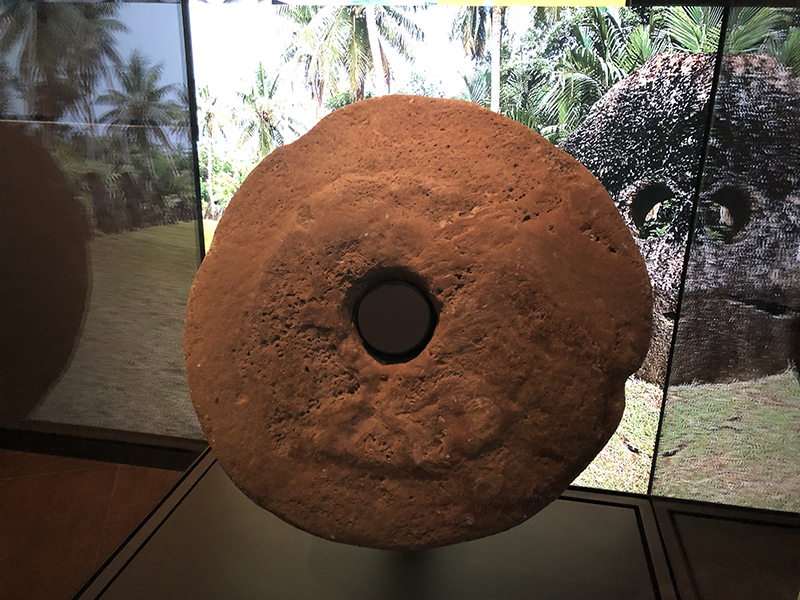
Source: Museum Of Money – Frankfurt, Germany
As trade expanded, these primitive systems gave way to more sophisticated forms, but the fundamental relationship between money and power remained: whoever controlled the supply controlled the economy.
The Golden Age Of Money
Gold and silver emerged as the dominant forms of money. Their scarcity, durability, and divisibility made them ideal stores of value. For centuries, money was backed by these precious metals—coins contained actual gold or silver, and paper notes could be redeemed for metal on demand. This “Golden Age” provided stability because governments couldn’t print gold. The supply was limited by mining capacity, not political will.
However, gold-based systems concentrated power in those who controlled the mines and vaults. Nations with gold reserves wielded disproportionate economic influence. The discovery of new gold deposits could disrupt monetary stability. And eventually, the temptation to print beyond gold reserves proved too great for governments to resist.
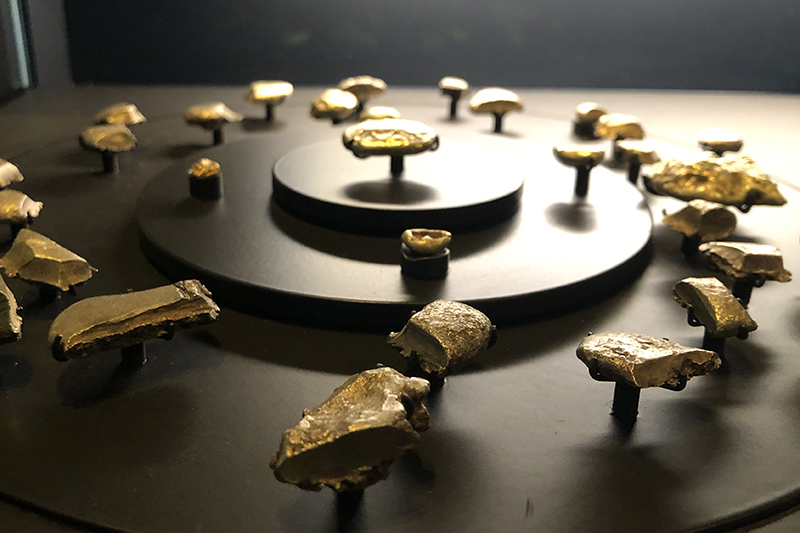
Source: Museum Of Money – Frankfurt, Germany
Money and power remained inseparable—those with gold reserves had power; those without were economically subordinate.
The Representative Age Of Money
As economies grew, carrying gold became impractical. Paper money emerged as a claim on gold held in vaults—a representative currency. Initially, this system maintained the discipline of the gold standard while enabling convenient trade. But it introduced a fatal vulnerability: the custodians of the gold could issue more paper than they held in reserves.
Slowly, the link between paper and precious metals eroded. Governments facing wars, depressions, or political pressure chose to print rather than maintain discipline. The representative system became a stepping stone to something far more manipulable—and far more dangerous.
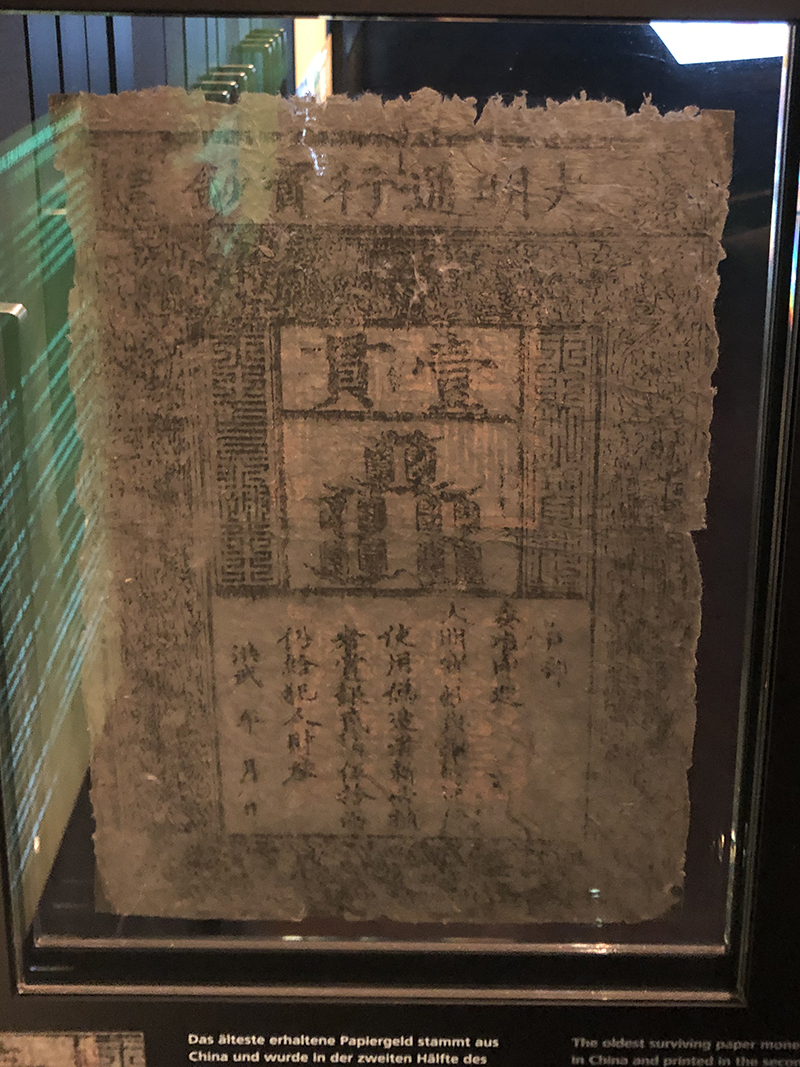
The representative age ended when governments realized they could seize complete control of money by severing the gold link entirely.
The Fiat Age Of Money
Today we live in the fiat era—”let it be” money created by government decree. No physical backing. No scarcity constraints. Unlimited printing capacity. Central banks can create trillions with keystrokes, funding government spending, bailing out favored institutions, and manipulating economic outcomes. The power is absolute—and absolutely corrupting.
The consequences are predictable and devastating. Inflation erodes savings. Currency devaluation steals purchasing power. The wealth gap widens as newly printed money flows first to the well-connected. Labor is devalued as money becomes cheaper to produce. Financial stability becomes impossible when the money supply depends on political calculations rather than economic reality.
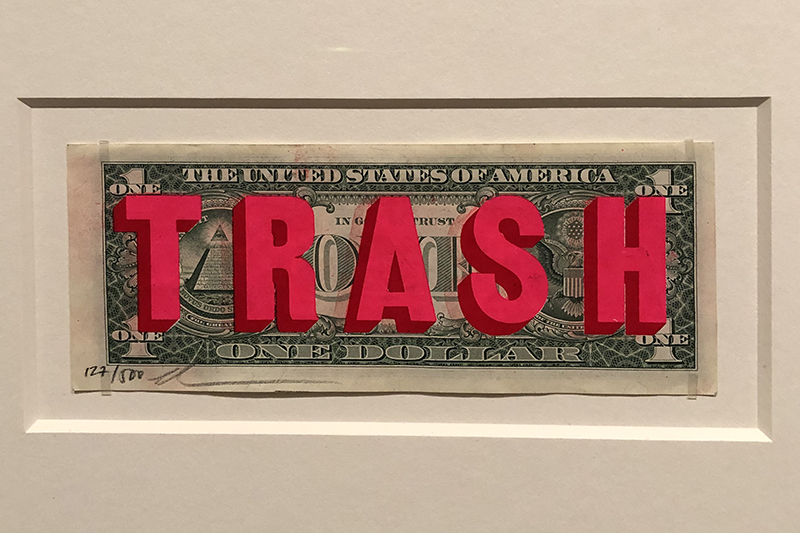
Source: Fitzwilliam Museum, Cambridge, England
In the fiat age, money and power are more inseparable than ever—central banks wield godlike power over economies, and individuals have no escape from their decisions.
Bitcoin Returns Power To Individuals
Bitcoin breaks the historical pattern. It’s scarce (21 million max), digital, and decentralized. No government controls it. No central bank can print more. Its monetary policy is encoded in software, enforced by mathematics, and immune to political manipulation. For the first time, individuals can hold money that cannot be debased, seized, or censored by the powerful.
With Bitcoin, money and power are still inseparable—but now that power is distributed across millions of individuals rather than concentrated in central banks. Each person who adopts Bitcoin takes power back from the institutions that have controlled money for millennia. The network grows stronger, more secure, and more valuable as more individuals join.
Money And Power Are Inseparable. With Bitcoin, You Hold The Power. Use Bitcoin.
History proves that money and power cannot be separated. The only question is who holds that power. For thousands of years, it was kings, central banks, and financial elites. Bitcoin changes the equation. It gives individuals the hardest money in history—scarce, sovereign, and unstoppable. Money and power are inseparable. But now, for the first time, that power can be yours. Take it. Use Bitcoin.
2 thoughts on “Reason 88: Money And Power Are Inseparable”
Comments are closed.
[…] This creates a system where politicians are essentially bought and paid for. They become puppets on strings, with their donors pulling the marionette’s handles. The people who elect them are nothing more than an afterthought, a necessary evil to get to the real goal: money and power. […]
[…] it enables individuals and institutions to exert influence over resources, human labor, and more. Money and power simply cannot be separated because money represents human energy exerted over time. Money is literally human power. Those who […]